
 Products
 Microrepair for enamel care
- Toothbrushes and Accessories
 Gums Problems
- Sensitivity
- Mouthwash
- Professional Area
Products
Microrepair for enamel care
Gums ProblemsMouthwashProducts
Microrepair for enamel care
Gums ProblemsMouthwashBiorepair was created in 2006, a toothpaste based on the Microrepair technology, from the collaboration between the Coswell research laboratories and Professor Roveri from the LEBSC (the Laboratory of Environmental and Biological Chemical Structures).
The LEBSC has been working for over 30 years in the “G. Ciamician” Chemistry Department of the University of Bologna, using the most advanced chemical and physical techniques to study the chemical and biological features of the mineralisation processes of calcified tissues, bones in particular.
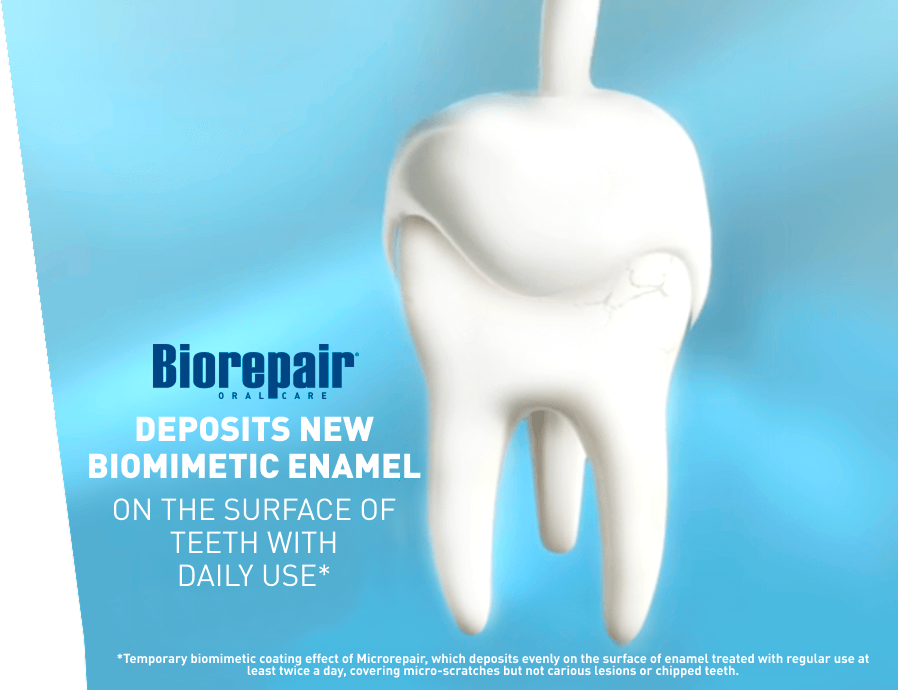
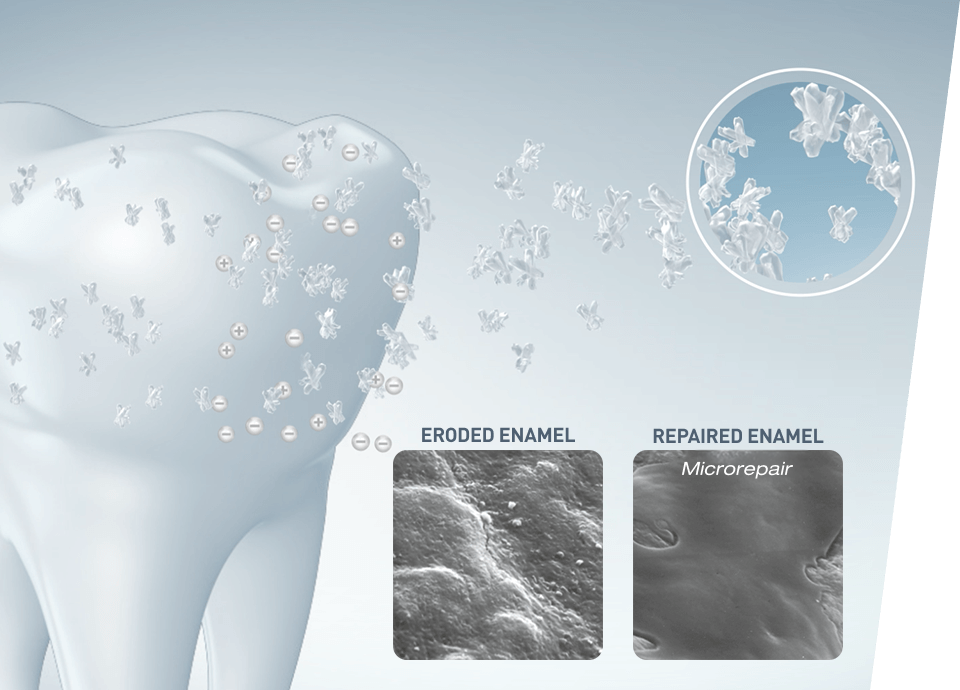

Microrepair is zinc-substituted-carbonate-hydroxyapatite crystals. Microrepair particles are created in the lab through an innovative synthesis process achieved by controlling the micrometic aggregation of
micro-particles crystals. The composition of these micro-particles is very similar to the composition of tooth enamel.
This similarity gives Microrepair a biomimetic property, allowing the micro-particles to integrate permanently with tooth enamel and dentine, no matter the condition of the mouth, thus repairing enamel and dentine evenly and naturally.
Thanks to the presence of free and negative phosphate and calcium ions, the hydroxyapatite in the Microrepair can interact with the hydroxyapatite of the teeth and bind permanently.
The Microrepair particles form an even coating on the tooth surface, penetrating cracks in the enamel and chemically binding to it, thus repairing and remineralising them.
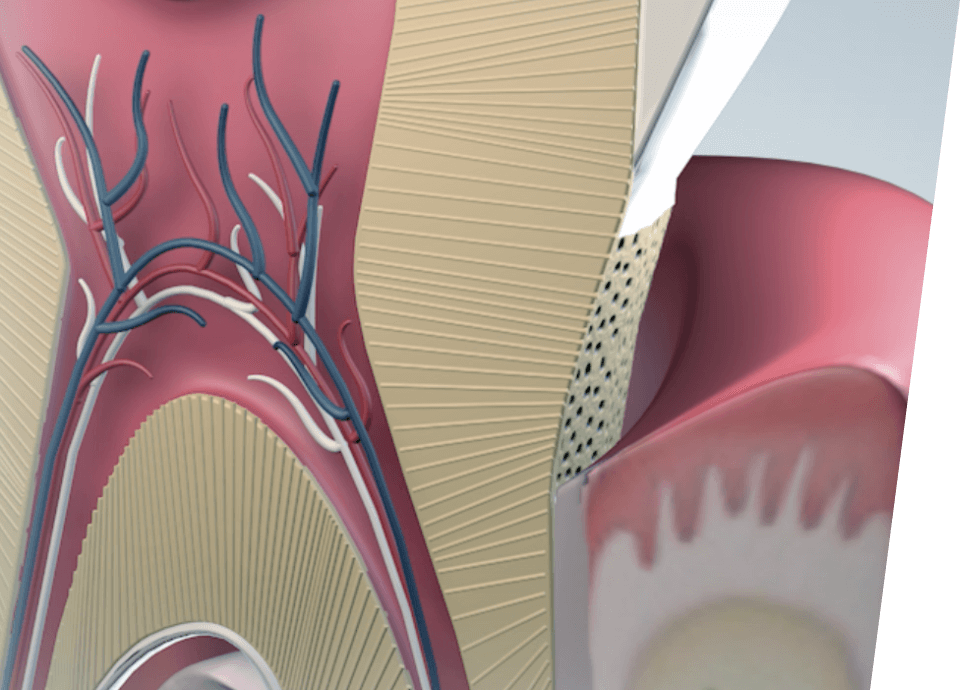
Clinical tests have shown that Microrepair deposits 50% more enamel on the tooth surface. In doing so, it creates a coating that protects the enamel and teeth from the bacterial biofilm caused by plaque and tartar build-up that leads to cavities and gum discomfort.
The bacteria in the biofilm feed off of sugar and lower the pH of the mouth, creating an acidic environment that is corrosive to enamel. As the pH of the mouth lowers, Microrepair frees antibacterial zinc ions, which combine with the saliva to restore the pH of the mouth to an alkaline level. This reduces the growth of bacteria, such as Streptococcus Mutans, one of the main types responsible for cavities.
Microrepair particles have additional effects, such as absorbing the sulphur compounds responsible for bad breath. The daily use of Biorepair® effectively fights the problem of bad breath thanks to the absorbent properties of the Microrepair particles.
Clinical study on 100 patients, average result obtained with Schiff Air Index and VAS after 30 seconds of product use. (2) in vitro test. Compared to a tooth treated with standard Fluoride *Temporary biomimetic coating effect of Microrepair® that deposits evenly on the surface of the treated enamel with regular use at least 2 times a day, covering micro-scratches, but not carious lesions or chipped teeth.
